
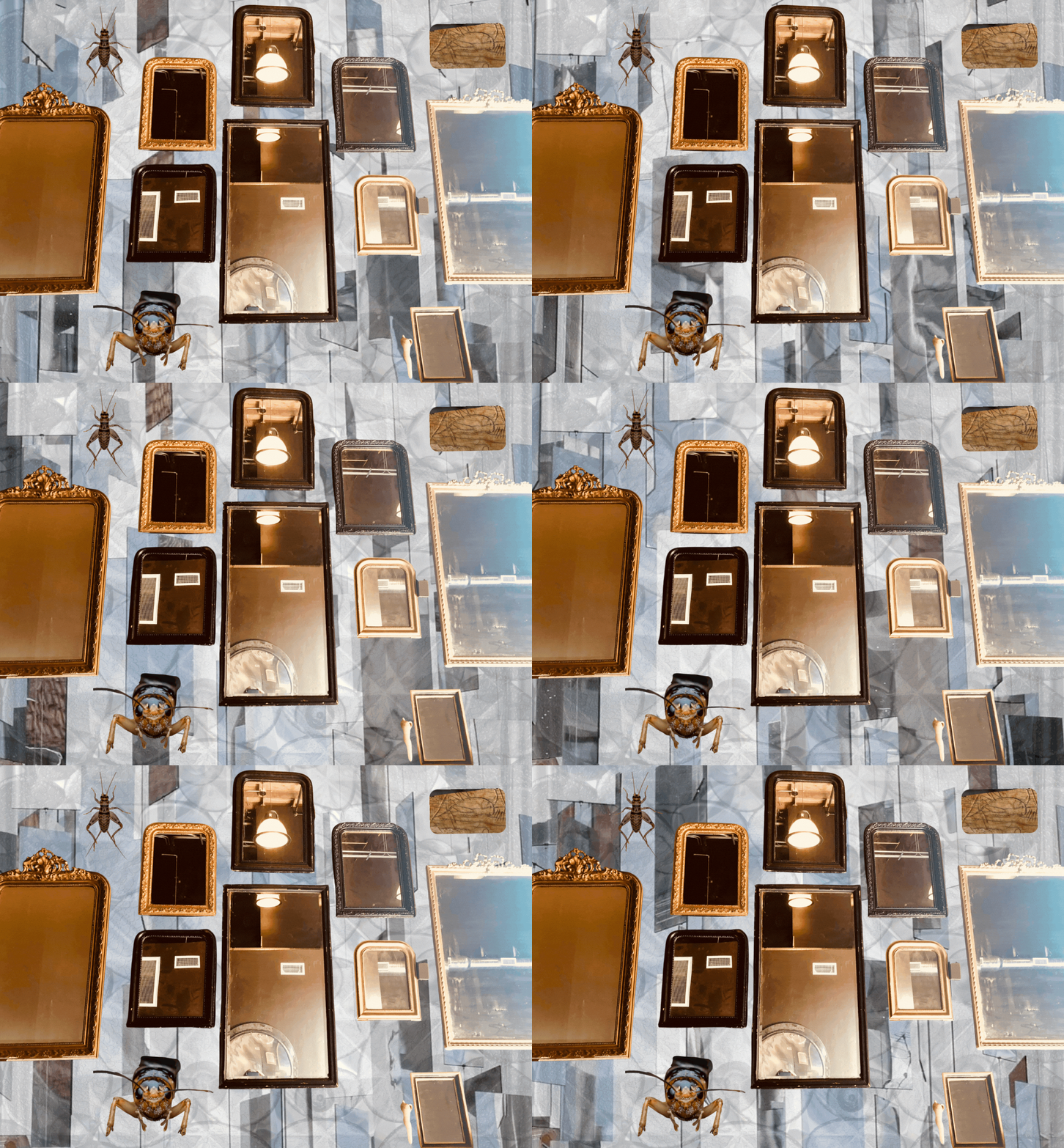
The Creature of the Face
The world embeds its signals, no matter the species.
There are moments when the face behaves like a separate creature. Light approaches and it withdraws, expression tight, guarding whatever small heat it has left. A camera rises and it performs a quiet vanishing act. The photograph documents the decoy, not who stepped aside.
For a long time, the world made it hard to see yourself. The first mirrors were dark glass and metal, more omen than likeness. Then somebody in Venice laid tin and mercury behind glass and the face arrived.
Crickets are also ruled by their bodies’ private decisions. Soft forms, long antennae, the unspectacular colors of living bark. In daylight, they go missing on purpose: under bark, stones, the seams of things. They loosen soil with their mandibles and throw it backwards to make a home. Stridulation: a body scraping itself into audibility, acting on an impulse older than intention.
A screen is a mirror that wants things from me. Angle, nail, jaw, hair, tone. There is the me in the room and the me on the glass and they never meet. The persona is what the face pays to be allowed inside the frame.
Only some crickets sprinkle the night with sound. A rasp here, a serration there, testing the dark for weaknesses with bodies capable of marking the air. Now and then one goes silent, quiet heavier than song. The world embeds its signals, no matter the species.
Online I chirp or hide. A post is a sound; a silence is a strategy. Crickets chirp faster when it’s warm, slower when it’s cold. Their metabolism shifts and the sound follows. My own rate change when someone turns their gaze toward me in a room. The humidity rises.
The ancient pets are omnivorous, not sentimental: seedlings, fungi, scraps of what the world leaves behind. They take what’s fallen and turn it into more of themselves. Engines of survival, writing themselves into each new patch of dirt.
Thank you for reading. If this stayed with you, please consider supporting my independent project.


